Quick answer: Conveyor-based robotic sorting combines a moving material stream with a camera, detection software, a motion-control system and a robotic end-effector. Recognising an item in an image is not the same as reaching it while the belt is moving — the conversion from pixels to a physical pickup location is where a software demonstration becomes a real automation system.
Connecting trained vision models with motion control, precise pickup and reliable material separation.
What is conveyor-based robotic waste sorting?
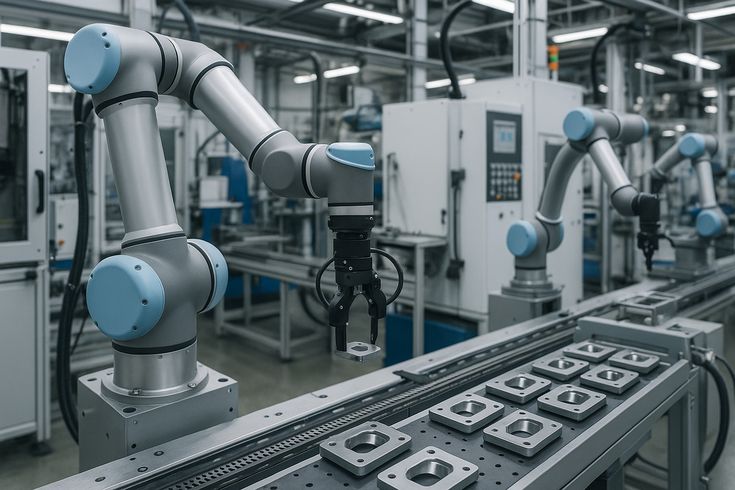
Conveyor-based robotic sorting combines a moving material stream with a camera, detection software, a motion-control system and a robotic end-effector. The aim is straightforward: recognise an item as it approaches, determine a suitable pickup position and move it to the correct collection area.
The important challenge is integration. Seeing an object in an image is different from reaching it while the conveyor is moving. Reliable sorting depends on software and mechanics working as one system.
How does the system work?
- Material movement. Items travel along a conveyor within a defined observation and pickup zone.
- Image capture. A camera observes the belt and provides frames to the vision application.
- Object detection. A trained recognition model identifies the relevant material and estimates where it appears in the camera image.
- Position calculation. Software translates image coordinates into a usable physical pickup location, taking camera calibration and conveyor movement into account.
- Robot command. When a pickup is feasible, the controller selects a motion sequence and operates an appropriate gripper or end-effector.
- Separation and confirmation. The item is placed into its assigned location, and the system checks the outcome when suitable feedback is available.
A detection box is not a robot coordinate
A computer-vision model may locate an object in pixels, but the arm must move in physical space. Camera calibration, robot reach, conveyor timing, object height and pickup orientation all matter. This conversion layer is where a software demonstration becomes a real automation system.
What does the trained dataset contribute?
A labelled image dataset teaches the vision model what to look for. Each object requires a consistent material label and location. Training, validation and held-out testing help reveal whether the model can identify new objects rather than only recognise images it has already seen.
In a sorting line, that information can guide the robot toward a candidate item. It does not independently establish grip strength, object weight, suction suitability, collision clearance or timing. Those remain engineering decisions for the mechanical and control layers.
Where can robotic sorting be useful?
- Material recovery lines. Separate selected recognisable materials from mixed streams.
- Recycling preparation. Assist with sorting before further material processing.
- Industrial handling. Transfer repeatable, identifiable parts or packaging between locations.
- Research and prototyping. Test the interaction between model predictions, robot motion and conveyor control.
Key engineering challenges
Moving-target timing
An item continues travelling after the camera detects it. The controller must estimate where the item will be when the robot reaches the belt. Speed variation or processing delay can turn a correct detection into a missed pickup.
Gripping and release
Material shape, surface, weight and flexibility affect how an end-effector should hold an object. A successful grasp also needs a controlled release into the right destination.
Uncertain predictions and safety
When a model has low confidence, items overlap or the target falls outside the safe work area, the system should decline the pickup or request review. Emergency stops, protective guarding and mechanical clearances must be addressed before live use.
Measuring real performance
Model accuracy alone is not enough. Meaningful system metrics include correct picks, missed picks, incorrect placements, sorting throughput, cycle time and recovery from jams or unexpected objects.
From prototype to software-robot integration
A practical development sequence begins with verifying the conveyor and robot motions independently. The next steps are consistent image capture, material labeling, model evaluation, calibration of image-to-robot coordinates and controlled pick-and-place trials. Only then should continuous, unattended sorting be considered.
Prototype footage can demonstrate a conveyor, robotic motion and a computer-vision environment. It should not be treated as evidence of a fully autonomous detection-to-pick cycle until that complete sequence has been tested and documented.
How M PRO9 approaches robotics integration
We approach robotic waste segregation as a connected engineering problem. Computer vision must provide dependable information; software must convert it into controlled commands; and the mechanical system must execute those commands repeatably. Testing each layer — and then testing the complete cycle — is what makes integration credible.
Conclusion
The future of intelligent sorting is not simply a camera beside a conveyor or a robot beside a bin. It is the coordinated movement from recognition to decision to physical action. When the data, control logic and mechanical design are aligned, robotic sorting becomes a practical direction for smarter material handling.
Exploring a robotics or automation application?
M PRO9 develops across AI, embedded systems, software and robotics. Discuss an engineering requirement with our team on the contact page, or read more about our robotics and automation work.