
Robotics & Automation
Machines That Sense, Decide, Act.
Custom robotics systems, automation workflows, machine vision, and smart control — engineered for real environments, not demos.
How It Works
The Automation Loop
Every system we build passes through this cycle — continuously, at hardware speed.
Cameras, sensors, and vision systems feed real-time data about the physical environment.
Embedded controllers and programmable logic process inputs and determine the correct action.
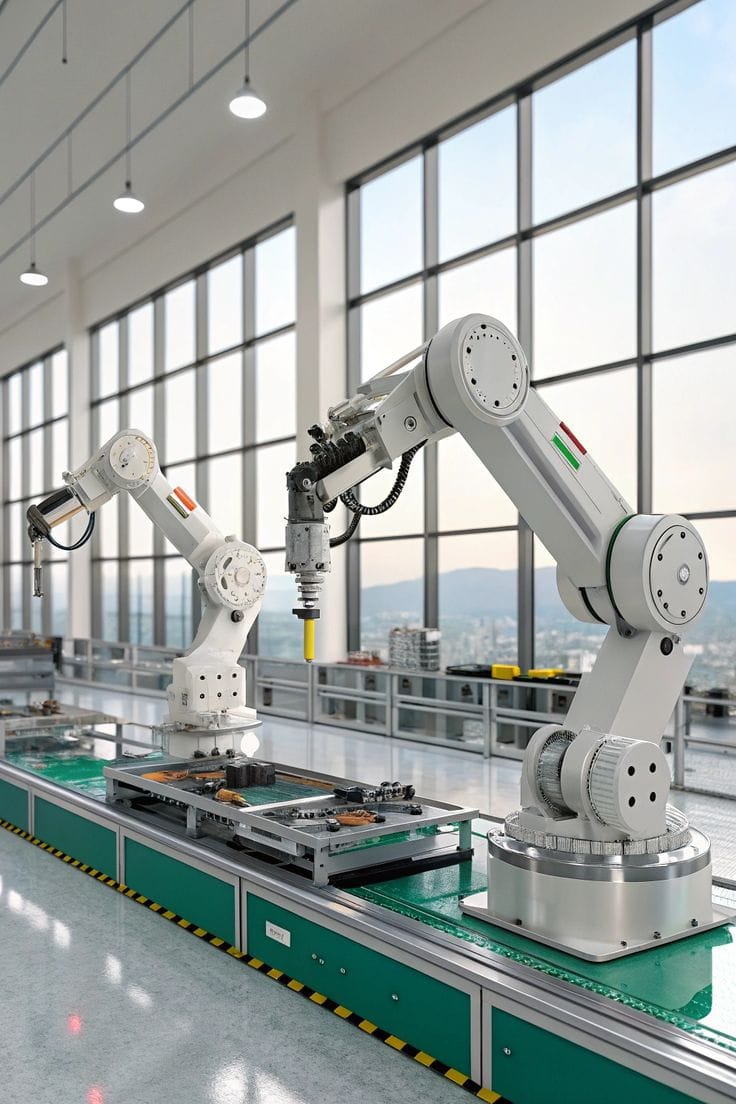
Actuators, motors, and robotic arms execute with precision — the physical output of decisions made.
Feedback loops close the cycle — measuring outcomes, flagging drift, and feeding the next sense cycle.
Purpose-Built Robots
for Any Application
We design and build robots tailored to your exact operational requirements — from embedded firmware to mechanical integration, delivered production-ready.
Embedded Control
What Our Systems Produce
Every robot and machine we build outputs real-time data streams — sensor inputs, control outputs, and feedback loops running at hardware speed. This is what that looks like.
End-Effector Position
Where We Apply This
Five Domains
Education & Labs
Robotics platforms, demonstration rigs, and automated lab setups built to teach and withstand repeated daily use in institutional environments.
Industrial Workflows
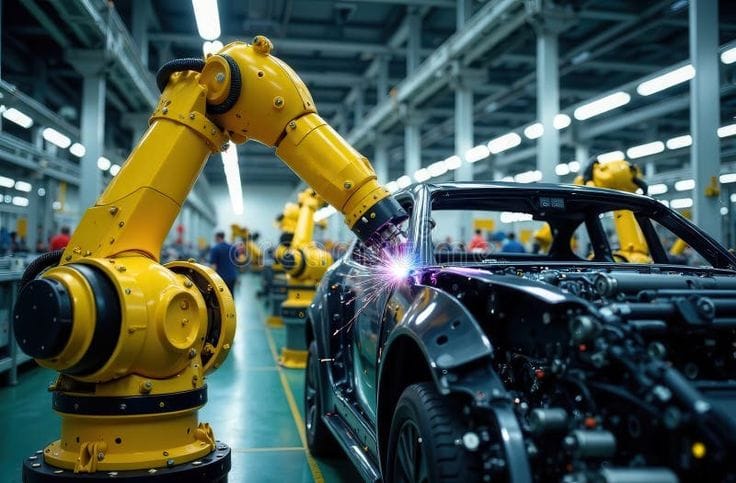
Assembly, material handling, and process automation for manufacturing environments that require reliability, repeatability, and precision at scale.
Waste & Sorting Systems
Vision-guided sorting that classifies and routes materials automatically — applied in waste management, recycling, and logistics operations.
Monitoring & Inspection
Automated systems that detect defects, measure components, and monitor conditions in real time — removing dependence on manual checks.
Prototype Development
Rapid-build prototypes that let teams validate a system concept before committing to full production tooling and deployment.
Our Process
How We Build
A practical process from task understanding to working system — no skipped steps, no handwaving.
Understand the Task
We start with what the system needs to do: its physical environment, inputs, outputs, constraints, and what a reliable outcome looks like in practice. No assumptions.
Design the System
Mechanical, electrical, and software architecture designed together. Hardware and software decisions inform each other from the start — not in isolation.
Build and Integrate
Components selected, assembled, and integrated with control logic tested under representative conditions before the full system is brought together.
Test and Improve
Real operating conditions reveal edge cases. We test thoroughly, document failure modes, and stay engaged to refine the system after initial deployment.
What a robotics engagement includes
A working system, not a demonstration. Mechanical, electrical, and software work are scoped together because the automation loop above only closes if all three do. That is the shape of our robotic dry waste segregation system — a robotic arm built with motion control and sensor integration.
- A task definition — the physical environment, inputs, outputs, and constraints, plus what a reliable outcome looks like in practice.
- Co-designed architecture — mechanical, electrical, and software decisions made against each other rather than in isolation.
- Custom embedded firmware and control logic for the controllers and programmable logic that make the decisions.
- Sensor integration and fusion — cameras, sensors, and vision systems feeding real-time data the controller can act on.
- A task-specific form factor with components selected, assembled, and integrated rather than adapted from a generic platform.
- Documented failure modes from testing under representative conditions, and continued engagement to refine the system after initial deployment.
Common questions about robotics and automation projects
Can a system integrate with machinery we already operate?
PLC integration is one of the control disciplines MPRO 9 works in, so what is possible depends on what your current machinery exposes. Robotics and automation systems are designed around the physical environment, inputs, outputs, and constraints captured at the start.
Do you build the mechanical side as well as the control software?
Yes. MPRO 9 builds robots from embedded firmware through to mechanical integration, with the form factor designed for the specific task rather than chosen off a shelf.
Can we validate a concept before committing to full deployment?
Yes — MPRO 9 builds rapid prototypes for exactly that. A robotics or automation concept can be tested as a working prototype before production tooling and full deployment are committed to.
What happens after the system is installed?
Real operating conditions reveal edge cases a lab does not. After a robotics or automation system is installed, MPRO 9 documents failure modes and continues engagement to refine the system once it is running.
Related engineering insights
- How computer vision is used in industrial automationVision-guided inspection, sorting, and measurement.
- AI agents vs traditional automationWhere rule-based control ends and learned behaviour begins.
- Idea to product: the complete development processWhere a validated system concept fits in the wider build.
Have a robotics or automation idea?
Let's turn it into a working system.