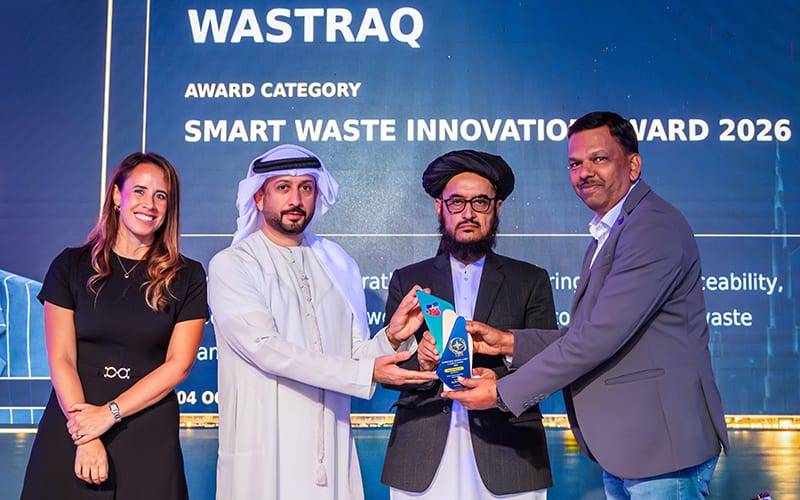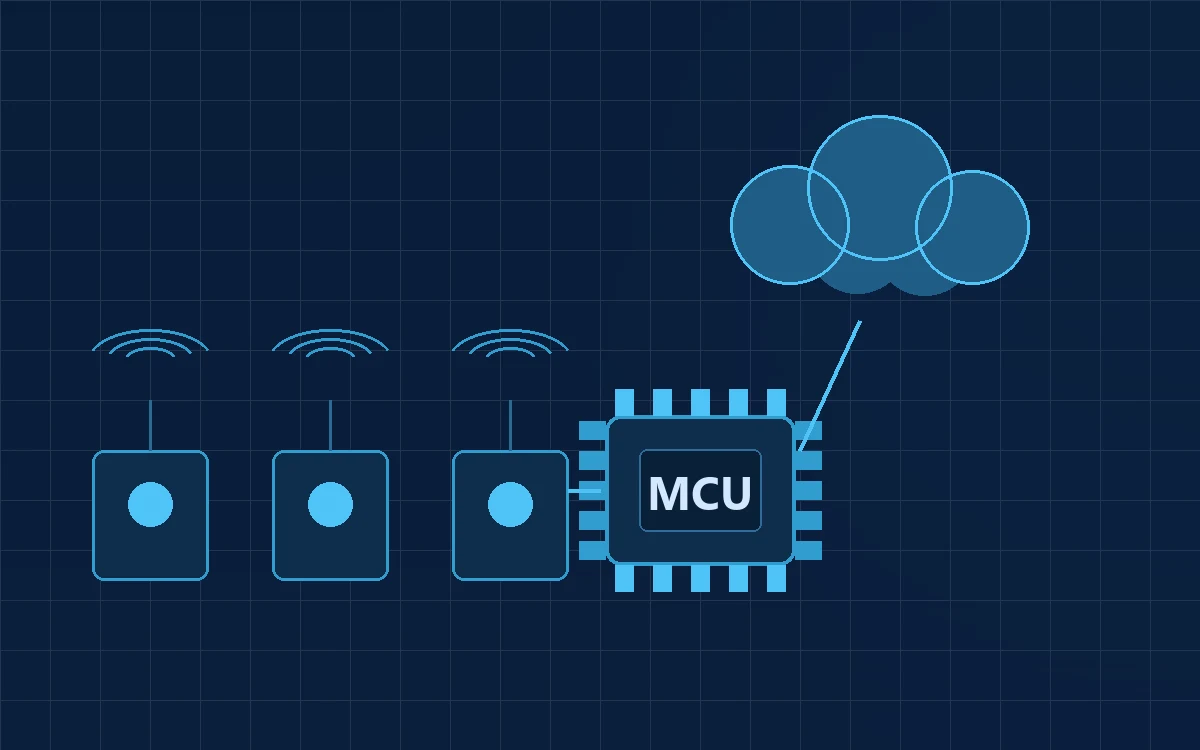

Quick answer: EPR certificates, carbon credits and water credits are three different instruments, with different issuers and different rulebooks. None of them can be claimed on intent; each needs measured, verified evidence. A Sustainable Tech Park puts a Category III recycling unit and three monitoring platforms — WASTRAQ for waste, KARBANTRAQ for trees and WATRAQ for water — on one data backbone, so that evidence is collected from the first tonne, tree and litre.
Indian cities and villages already do much of the work that environmental markets reward. What they usually lack is evidence that will satisfy an auditor. This article explains how one modular park, a recycling unit for multilayer plastic with WASTRAQ, KARBANTRAQ and WATRAQ as its data backbone, can help municipalities, urban local bodies and rural local bodies close that gap.
Key takeaways
- EPR certificates, carbon credits and water credits are different instruments with different issuers and rules. None can be claimed on intent; each needs measured, verified evidence.
- Category III multilayered plastic is the hardest packaging to recycle and the least rewarded. A 2026 CSE study found that EPR payments recover only a small share of what cities spend handling it.
- A Sustainable Tech Park puts a Category III recycling unit and three monitoring platforms, WASTRAQ for waste, KARBANTRAQ for trees and WATRAQ for water, on one data backbone, so evidence is collected from the first tonne, tree and litre.
- The local body should own its credits. M Pro9 supplies technology and documentation; certificates and credits are issued only through the CPCB portal and recognised registries, after independent verification.
Why local bodies leave environmental value on the table
Every day, India’s municipal corporations, municipal councils and town panchayats (urban local bodies, or ULBs) and its gram panchayats (rural local bodies, or RLBs) collect plastic packaging, plant and water trees, run sewage treatment plants and look after lakes and ponds. Environmental markets now pay for many of these outcomes. Producers buy extended producer responsibility (EPR) certificates for recycled plastic, companies buy carbon credits, and some companies now pay for verified water savings. Yet little of this money reaches the bodies that do the work.
Three developments in 2026 make this worth fixing now:
- The Solid Waste Management Rules, 2026 are in force. Notified on 28 January 2026 and effective from 1 April 2026, they require four-stream segregation (wet, dry, sanitary and special-care waste), restrict landfilling to waste that cannot be recycled, reused or recovered, and, in Rule 8, encourage local bodies to generate carbon credits from waste management.
- Plastic EPR has tightened. The Plastic Waste Management (Amendment) Rules, 2026 (G.S.R. 237(E), 31 March 2026) add recycled-content and reuse obligations, and allow verification by designated agencies and registered environment auditors.
- Multilayer plastic is under the spotlight. In September 2026 the Central Pollution Control Board (CPCB) released draft guidelines on the environmentally sound management of Category III multilayered plastic packaging waste, which describe ULBs as the link between households and recyclers.
The obstacle is rarely the activity itself. It is the evidence: weighbridge slips, batch records, photographs, meter readings and an unbroken chain of custody, kept in a form that a regulator, an auditor or a registry will accept. Whoever holds that evidence usually captures the value.
Category III: the hardest plastic, and the least rewarded
Category III covers multilayered plastic packaging: packs with at least one layer of plastic and at least one layer of another material, such as aluminium or paper. Snack packets, sachets and laminated pouches are typical. It is light, bulky, often contaminated and very hard to recycle, which is why so much of it is burnt or dumped.
A study by the Centre for Science and Environment (CSE), released in August 2026, put the cost of managing Category III waste at ₹2.35–3.67 per kg in Indore, up to ₹9.15 per kg in Dharamshala and ₹9.87–11.83 per kg in Sri Vijaya Puram. EPR certificates, meanwhile, were trading at about ₹1–1.25 per kg, close to the bottom of the permitted price band; in Dharamshala that recovered only 13–14% of the cost. The study also found that collectors, informal waste workers, ULBs and material recovery facilities (MRFs) lack adequate access to EPR finance.
The lesson is not that EPR is worthless, but that EPR alone will not pay for Category III. A workable model combines certificate income with product sales, a fair processing fee and, where eligible, other environmental revenue. It must also make sure that the local body actually receives its share.
| Item | Position in 2026 |
|---|---|
| Producers’ recycling target (share of their Category III EPR obligation) | 50% in 2026–27; 60% from 2027–28 |
| Recycled content required in Category III packaging (plastic component only) | 5% in 2026–27; 10% from 2027–28 |
| End-of-life routes such as cement-kiln co-processing, waste-to-energy and pyrolysis | Used for the obligation remaining after the recycling target is met |
| EPR certificate price band | 30–100% of the applicable environmental compensation |
| Reported Category III certificate realisation | About ₹1–1.25 per kg |
| Municipal cost of managing Category III | ₹2.35–3.67 per kg (Indore) to ₹9.87–11.83 per kg (Sri Vijaya Puram) |
Sources: GreenSutra; Tamil Nadu Pollution Control Board EPR handbook; Corporate Professionals (April 2026); CSE (August 2026). Full references are listed at the end.
What is a Sustainable Tech Park?
A Sustainable Tech Park is a modular facility, usually on land within or beside an existing solid waste management site, that does two jobs. It processes the waste that local bodies struggle with most, starting with Category III plastic. And it serves as the data and verification hub for an area’s environmental work on waste, trees and water. One park can serve a large city, or a cluster of towns and panchayats.
| Component | What it does | What it helps a local body claim | Status |
|---|---|---|---|
| Category III recycling unit | Turns multilayer packaging into durable products such as interlocking pavers, boards and panels, and sends the fraction that cannot be recycled to authorised co-processing | Category III EPR certificates, generated by the registered processor | Proposed module |
| WASTRAQ | Records waste from source to final destination: weighment, batch IDs by EPR category, GPS, photographs, dispatch, recipient acknowledgement and mass balance | The evidence behind EPR returns and audits; activity data for waste-based carbon projects | In pilot use in Mysuru |
| KARBANTRAQ | AI and GPS-geofenced monitoring, reporting and verification (MRV) for tree plantations, with a record for every tree: location, photographs and growth between audit dates | Carbon credits from tree planting, where a registry and methodology apply | Live platform |
| WATRAQ | Tracks water saved, harvested or reused: meter readings, flows, end users and evidence of gainful use | Water credits, for example under the Universal Water Registry | In development |
Other modules, such as dry-waste sorting, recycling of Category I and II plastics and wet-waste processing, can be added where a local body needs them. The principle stays the same: every module feeds one record. Figure 1 shows how that record moves from activity to verified value.
| Activity | Measured by | Verified by | Issued as | Value received |
|---|---|---|---|---|
| EPR certificates — Category III plastic collected, sorted and processed at the park | WASTRAQ: weighment, batch IDs by category, photos and dispatch records | Registered processor files returns; auditors verify | EPR certificate on CPCB’s centralised portal | Agreed share of certificate proceeds, plus product sales |
| Carbon credits — trees planted and maintained; organic waste kept out of dumpsites | KARBANTRAQ: tree-level records; WASTRAQ for waste data | Validation and verification by an accredited body | Carbon credit (1 tCO2e) from India’s CCTS or a voluntary registry | Credit revenue to the registered proponent |
| Water credits — treated water reused; rainwater harvested; aquifers recharged | WATRAQ (in development): meters, flows and end-use records | Verification under the water-credit standard | Water credit, e.g. a UWR RoU (about 1,000 litres) | Credit revenue to the registered proponent |
Sustainable Tech Park: one site and one data backbone. The local body owns its data and its credits; M Pro9 supplies technology and documentation and does not issue or certify credits.
Three credits, three rulebooks
People often use the word “credits” loosely. The three instruments a local body can work with are quite different, as Table 3 shows.
| EPR certificate | Carbon credit | Water credit | |
|---|---|---|---|
| One unit represents | A verified quantity of plastic packaging recycled or processed at end of life, by category | One tonne of CO2-equivalent reduced or removed | Typically one cubic metre (1,000 litres) of water saved, recharged or reused: a Universal Water Registry “RoU” |
| Rulebook | Plastic Waste Management Rules, 2016 as amended, and CPCB’s EPR guidelines | India’s Carbon Credit Trading Scheme (CCTS) offset mechanism, or voluntary standards such as Verra and Gold Standard | Voluntary standards such as the Universal Water Registry; India has no national water-credit market yet |
| Who creates it | Registered plastic waste processors, on CPCB’s centralised EPR portal | A registry, after the project is validated and its results are verified by an accredited body | A registry, after verification under its standard |
| Who buys it | Producers, importers and brand owners (PIBOs) with EPR obligations | Companies, and participants in India’s domestic carbon market | Companies with water-stewardship goals |
| What it depends on | The right category, verified quantities and a price within the regulated band | An approved methodology, a credible baseline, additionality and clear ownership | The standard’s rules on baseline, measurement and gainful end use |
EPR credits: turning multilayer plastic into certificates
CPCB’s draft guidelines on Category III waste, released on 7 September 2026 and still a draft at the time of writing, set a sensible order of preference. Recover plastic, paper or aluminium wherever that is technically possible. Where granules cannot be made, convert the material directly into products such as boards, sheets, panels or road material. Send only what remains to authorised end-of-life processing, such as cement-kiln co-processing. Open burning and improper landfilling are ruled out. The park follows the same order.
In practice the flow has six steps:
- Segregate and collect. Dry waste is collected separately, and Category III packaging is bagged separately at the MRF, where waste pickers and self-help groups can be paid for the material they bring in.
- Weigh and tag. Every lot is weighed, photographed and given a WASTRAQ batch ID tagged “Category III”, linked to its ward or source.
- Process. A registered processor at the park converts the material into products and records input, output and residue for each batch. Residue leaves only with transport documents, for an authorised facility.
- Generate certificates. The registered processor uploads verified quantities on CPCB’s portal, which generates Category III EPR certificates.
- Verify. Auditors look beyond portal data to invoices, weighment slips and transport documents, and where a producer’s figures and a processor’s figures differ, the lower one counts. WASTRAQ assembles this audit pack batch by batch.
- Sell and share. Producers buy the certificates within the regulated price band. The local body’s share is paid as agreed in the project contract and reported on open books.
How the local body gets its share
Under the current rules, EPR certificates are generated by registered processors, not by municipalities. A local body therefore shares in their value through its contracts: by owning the facility and appointing a registered operator, by agreeing a share of net certificate proceeds, or by supplying category-sorted material to registered processors under agreements with producers or producer responsibility organisations (PROs). In every case the tonnage is tagged, so that it can be sold only once.
Certify the product before you sell it
Pavers, boards and panels made from multilayer plastic must be tested for the use they are sold for. A footpath paver and a road kerb face very different loads, so test results, not assumptions, should decide where each product is used.
Carbon credits: trees, waste and the fine print
Carbon credits reward projects that reduce or remove greenhouse gases beyond what would have happened anyway. Three kinds of project matter most to local bodies:
- Keeping organic waste out of dumpsites through composting or biomethanation, which avoids methane. Voluntary standards have long-standing methodologies for this, and a CCTS methodology for compressed biogas was released in draft in August 2025.
- Capturing landfill methane. Landfill methane recovery is among the eight methodologies approved for India’s offset mechanism in 2025.
- Planting and maintaining trees in urban forests, avenues, parks and village commons. Tree projects can use voluntary methodologies such as Verra’s VM0047 for afforestation, reforestation and revegetation, subject to its land-eligibility rules. Forestry is an approved sector under the CCTS offset mechanism, and mangrove afforestation and reforestation is among its first approved methodologies.
KARBANTRAQ supports tree projects by keeping a record for every tree: its location and geofence, photographs taken at planting and at regular intervals, and its growth between audit dates, with separate access for administrators, field teams and auditors. That record is what an accredited verifier checks. The credit itself is issued by the registry, to the project proponent.
The fine print: additionality, ownership and scale
Rule 8 of the Solid Waste Management Rules, 2026 encourages local bodies to earn carbon credits, but many waste activities are now legal duties, and India’s scheme does not reward reductions that the law already requires. Commentators have pointed to open questions about additionality, about who owns the credits when a local body processes waste for bulk generators, and about how small projects can be grouped. Voluntary standards may accept projects that go beyond legal minimums, or that would not be viable without carbon revenue, but each case has to be argued.
Scale matters too. Validation and verification costs are largely fixed, so a single small project can spend more on monitoring than it earns. Pooling projects across many wards, towns or panchayats, with the state or a district body as the proponent, spreads that cost.
There is precedent. In 2020, Indore’s smart city company reported its first carbon-credit income after registering a bio-methanation plant, a compost plant and a 1.5 MW solar plant under the Verified Carbon Standard.
What about green credits?
India’s Green Credit Programme issues green credits for tree plantation, but since its revision in August 2025 these credits are non-tradable and cannot be linked to the carbon market. They can help a CSR partner meet its own obligations; they are not, today, a revenue source for a local body.
Water credits: counting every litre saved or reused
Water credits are the youngest of the three markets. The Universal Water Registry, which describes itself as the world’s first water-credits programme, issues verified water credits called RoUs, typically one for each cubic metre (1,000 litres) of groundwater-equivalent water. Eligible project types include rainwater harvesting, groundwater recharge, water conservation, and sewage or effluent treatment plants whose treated water is put to gainful use. Projects in Karnataka, Tamil Nadu, Telangana and Uttar Pradesh appear on its list.
For cities, the largest opportunity is treated used water. AMRUT 2.0 aims for recycled treated water to meet at least 20% of city demand and 40% of industrial demand at state level. Each million litres a day (MLD) of treated water that is verifiably reused is up to 1,000 cubic metres a day of potential credits, before any deductions the standard requires. For villages, the opportunities lie in rainwater harvesting, recharge structures and rejuvenated ponds.
WATRAQ, now in development, is being built for this. It brings together meter readings, flow logs, end-user records, water-quality tests and photographs, reconciles the volumes and assembles the verification pack. As with carbon, the registry issues the credits after independent verification, and the buyers are mainly companies with water-stewardship goals.
Avoid double claims
The same litre of reused water, or the same tonne of waste, must not be claimed twice for the same benefit under two schemes. Keep separate ledgers, and check each standard’s rules before registering a project.
Urban and rural local bodies: what changes
The instruments are the same for cities and villages. The scale and the structure differ.
| Urban local bodies (corporations, municipal councils, town panchayats) | Rural local bodies (gram panchayats and blocks) | |
|---|---|---|
| EPR | MRFs feed the park directly; Category III is collected door to door and at dry-waste collection centres | Panchayats send plastic to block-level plastic waste management units, which can feed a park |
| Carbon | Urban forests, parks and avenues; organic-waste and landfill projects | Plantations on village commons and institutional land; biogas |
| Water | Sewage treatment plants supplying treated water to industry and parks; lakes; rainwater harvesting on public buildings | Ponds, recharge structures and rainwater harvesting |
| Best structure | One park per city or cluster of towns | One park per block or district, with pooling at district or state level |
Rural infrastructure needs attention. In August 2025 a parliamentary committee reported that only 1,051 of 1,787 plastic waste management units under Swachh Bharat Mission (Grameen) were functional. A park that buys their output and provides the data backbone can help keep them running.
Safeguards: one tonne, one claim
- One unit, one claim per attribute. Every batch, tree and cubic metre carries a register of the claims made on it (material sale, EPR certificate, carbon credit, water credit), with its status and buyer.
- Category separation. Category III batches are processed and recorded separately, and certificates are generated only for the matching category.
- Monthly mass balance. What comes in must equal what goes out plus stock and residue, within tolerance. Certificate quantities never exceed verified output.
- Independent verification. EPR records are open to designated agencies and registered environment auditors; carbon and water claims to accredited verifiers.
- Ownership and transparency. The local body owns its data and, unless it decides otherwise, its credits. It receives regular summaries of tonnage, certificates, credits and revenue shared.
- Data protection. Role-based access, with data handled in line with the Digital Personal Data Protection Act, 2023.
How a local body can start
- Measure the baseline. Characterise the waste to find how much Category III arises; take stock of plantations; record treated-water and rainwater-harvesting volumes.
- Start with data. Put WASTRAQ on existing collection, MRF and disposal operations to build an auditable record. This costs far less than new plant, and it makes everything that follows easier to verify.
- Screen eligibility before spending. Check each carbon or water idea against the relevant methodology, the legal requirements and the likely cost of verification.
- Agree the terms upfront. Settle who owns the credits, how proceeds are shared, who pays for verification and how disputes are resolved.
- Add the Category III unit once feedstock, a site and buyers for its products are secured.
- Pool with neighbours. Join other local bodies so that carbon and water projects reach a scale at which verification pays.
What we do not claim
- M Pro9, WASTRAQ, KARBANTRAQ and WATRAQ do not create, certify, issue or guarantee EPR certificates, carbon credits or water credits. These are generated or issued only through the CPCB portal or recognised registries, after verification.
- Eligibility, prices and timelines depend on regulations, methodologies and markets that change. The figures quoted in this article come from the public sources listed below.
- WATRAQ is in development and the Category III unit is a proposed module; their performance will be demonstrated in pilots.
From activity to evidence to value
India’s local bodies already carry much of the cost of the circular economy. The rules of 2026 strengthen their claim to part of its value, but only if their work is measured, recorded and verified. A Sustainable Tech Park is designed to do exactly that: process the waste that nobody else wants, and turn the everyday work of cities and villages into evidence that EPR portals and credit registries can trust.
If your municipality, urban local body or panchayat would like to explore a Sustainable Tech Park, start with a conversation. Write to info@mpro9.com or call +91 90715 10909.
About the author
Darshan C is Vice President at M Pro9 Private Limited, Mysuru, where he works on circular-economy technology for local bodies. A mechanical engineer, he is the inventor of the Eco Interlock Paver, made from low-value plastic, and was nominated for the Earthshot Prize in 2024.
Sources
- Centre for Science and Environment, “Who pays the cost of managing plastic packaging waste in India, asks new CSE study”, 12 August 2026. www.cseindia.org/who-pays-the-cost-of-managing-plastic-packaging…
- Corporate Professionals, “Plastic Waste Management (Amendment) Rules, 2026: strengthening EPR, recycled content and reuse obligations” (G.S.R. 237(E), 31 March 2026), 7 April 2026. www.corporateprofessionals.com/regulatoryupdate/plastic-waste-ma…
- GreenSutra, “Plastic Packaging EPR in 2026: All You Need to Know”. greensutra.in/news/plastic-epr-explained-2026/
- Tamil Nadu Pollution Control Board, handbook on EPR guidelines for plastic packaging. tnpcb.gov.in/PDF/Updates/Whats_New/GuidelinesEPR14524.pdf
- TeamLease RegTech, “CPCB issued the draft guidelines on the environmentally sound management of Category III multilayered plastic packaging waste”, September 2026. teamleaseregtech.com/updates/article/59363/cpcb-issued-the-draft…
- Corpseed, “CPCB draft guidelines: Category III MLP waste management”, September 2026. www.corpseed.com/law-update/cpcb-draft-guidelines-category-iii-m…
- K&S Partners, “Solid Waste Management Rules, 2026 notified; to take effect from 1 April 2026”. ksandk.com/newsletter/solid-waste-management-rules-2026/
- LiveLaw, “Policy gap between Solid Waste Management Rules and carbon credits”, 13 February 2026. www.livelaw.in/amp/articles/solid-waste-management-rules-carbon-…
- OPIS, “India approves ten sectors for carbon offset market rollout in phases”, October 2024. www.opis.com/?p=30844
- Energetica India, “Govt approves 8 different methodologies under offset mechanism to advance carbon market”, 31 March 2025. www.energetica-india.net/news/govt-approves-8-different-methodol…
- JSA, “JSA Prism: Environment & Climate Change”, September 2025 (draft CCTS methodologies, including compressed biogas). www.jsalaw.com/?p=55047
- Verra, “VM0047 Afforestation, Reforestation, and Revegetation, v1.1”. verra.org/methodologies/vm0047-afforestation-reforestation-and-r…
- Mongabay India, “Green credit rules tweaked to favour canopy cover, remove trade provision”, 4 September 2025. india.mongabay.com/2025/09/green-credit-rules-tweaked-to-favour-…
- The Better India, report on carbon credits earned by Indore’s smart city projects, 24 November 2020. thebetterindia.com/243019/ias-hero-carbon-credits-indore-smart-c…
- Universal Water Registry (programme website). www.uwaterregistry.io/
- IMPRI, “Circularity in Urban Water: Assessing the Success of Reuse and Rejuvenation under AMRUT 2.0”, 6 August 2026. www.impriindia.com/insights/policy-update/success-of-rejuvenatio…
- DT Next, “Parl panel flags lagging plastic waste units, seeks urgent waste survey”, 11 August 2025. www.dtnext.in/news/national/parl-panel-flags-lagging-plastic-was…
All web sources were accessed on 26 October 2026.